

Three terms carry most of the hype in modern technology, and they get used as if they’re interchangeable. They aren’t, and once you see how they fit together you can’t unsee it.
Here’s the map. AI is a goal: machines doing things that would take intelligence from us. ML is a method: reaching that goal by learning from data instead of hand-coding rules. Data science is a discipline: extracting understanding and decisions from data, using ML when it helps and plenty of other tools when it doesn’t. I’ve written before about the AI/ML boundary specifically; this is the wider frame.
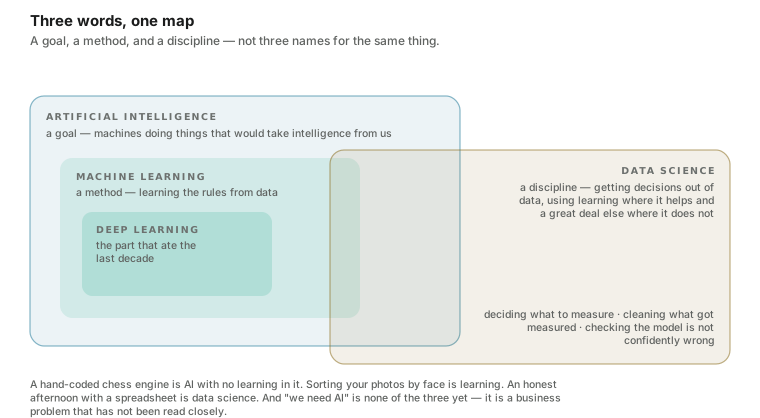
The part of that picture people find surprising is the overlap on the right. Data science is not a subset of AI. Most of the working day — deciding what to measure, repairing what got measured, checking a result is not confidently wrong — has no learning in it anywhere.
Each has its own history, and the histories explain the shapes. The AI ambition is old. Older than computers, if you count the myths about mechanical minds. As a research field it dates to the 1950s, and it has been through boom and winter more than once. ML grew inside it, starting from the perceptron era, and eventually became the dominant route because learned behaviour scaled where hand-written rules collapsed. Data science is the youngest: it exists because the volume of recorded data exploded past what classical analysis was built for, and someone needed to combine statistics, computation and domain judgement into one working practice.
You already use all three before breakfast. Your phone sorting photos by face: ML. The predictive text above your keyboard: ML again, of a kind I have an old soft spot for. Amazon nudging you toward a product, Netflix and Spotify curating your evening: recommendation models, learning from millions of people’s behaviour. A thermostat that’s learned your schedule: a small, humble intelligence in the AI sense, with ML inside. And behind every one of those products sits the data-science work nobody screenshots: deciding what to measure, cleaning what got measured, and checking the model isn’t confidently wrong.
Why does the distinction earn its keep? Because the words set expectations, and expectations drive budgets. “We need AI” usually decodes to a business problem that might need a model, might need better data plumbing, and occasionally needs a spreadsheet and an honest afternoon. Calling everything AI makes every project sound like the same project. Knowing which of the three things you’re actually asking for is the difference between buying a capability and buying a word.
If you’re trying to enter the field, the map tells you where to start, and it isn’t where the buzz points. Start with data science fundamentals: statistics, code, and the habit of asking what the data can actually support. ML sits on top of that. The AI framing arrives last, once you’ve earned the judgement about when learning helps at all. Curiosity is the only prerequisite, but order matters: the people who skip the foundations end up fluent in buzzwords and lost in practice.